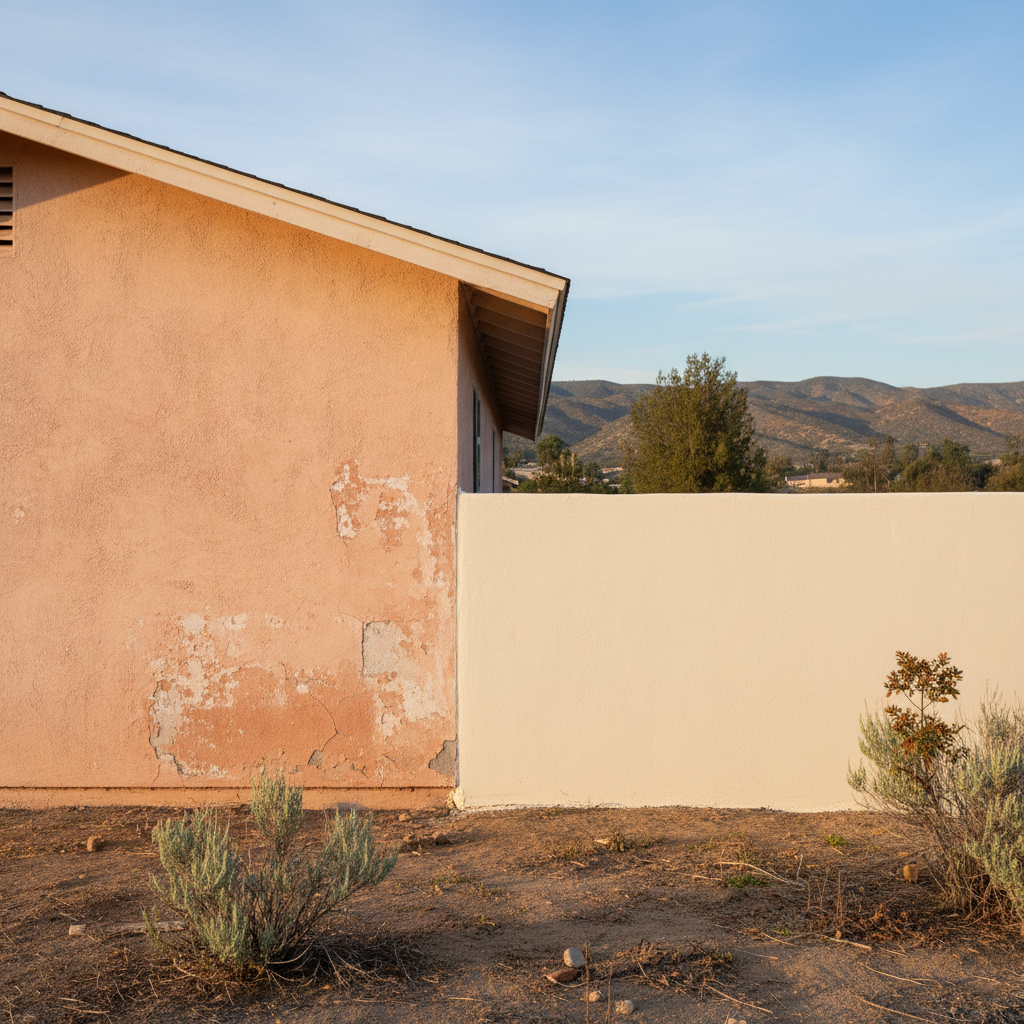
Alright, so you've got some stucco damage on your Hemet home. Maybe it's just a crack, or a ding from a rogue baseball, or even some water staining that's really starting to bug you. Your first thought is probably, "How do I fix this without emptying my wallet?" Generally, you've got two main ways to tackle it: a spot repair (which is basically patching) or a full re-dash, which is a much bigger job. Let's dig into what each option means for your house and, of course, your budget.
Spot Repair: The Quick Fix
A spot repair, or patching, is pretty much what it sounds like. We're only fixing the damaged area. If you've got a small crack, a hole where a satellite dish used to be, or just a localized section of stucco that's coming loose, this is often the first thing people think about. It's usually quicker, less messy, and definitely cheaper upfront, which is nice.
Cost: This is where patching really shines. You're paying for materials for a small area and labor for just a few hours, maybe a day. It's a fraction of the cost of re-dashing your whole house. For minor stuff, it's pretty economical.
Durability: A patch, if it's done right, can last a long time, especially if we've fixed whatever caused the damage in the first place (like a structural crack). But here's the kicker: the rest of your stucco is still the same age. If your house is 20, 30, even 40 years old, that old stucco will still be prone to new cracks or damage somewhere else. A patch doesn't magically make the whole wall young again.
Maintenance: Once it's patched, you treat it just like the rest of your stucco. Keep an eye on it, make sure no new cracks pop up around the repair. The biggest maintenance issue with patching usually comes down to how it looks.
Appearance: This is the big one, and honestly, it's where patching often falls short. Matching existing stucco texture and color perfectly is incredibly tough, almost impossible, especially on older homes. Stucco fades over time, thanks to our intense Hemet sun. Even if we use the exact same color mix, the new patch will likely look brighter, newer, and stick out like a sore thumb. We can try our best to blend it, but you'll often see the repair line. If your house has a very distinct, hand-troweled texture, a patch might never quite blend in completely.
Full Re-Dash: The Comprehensive Overhaul
A full re-dash means we're putting a brand-new finish coat of stucco over your home's entire existing stucco surface. This isn't just a paint job; it's a fresh layer of material. Sometimes, if the existing stucco is really in bad shape, we might even take it down to the brown coat or even the sheathing and start completely fresh. But usually, a re-dash is about putting a new, consistent finish on everything.
Cost: No sugarcoating it, this is a much bigger investment than a spot repair. You're talking about materials and labor for the whole exterior of your home. It's a significant project, yes, but it's also a significant upgrade.
Durability: This is where you get the most bang for your buck long-term. You're essentially getting a brand-new exterior finish. It covers all those existing minor cracks, gives you a fresh protective layer, and provides your home with a uniform, tough surface that will stand up to our desert climate for decades. It's like hitting the reset button on your stucco's lifespan.
Maintenance: With a fresh re-dash, your maintenance is super minimal for years. You'll want to keep an eye out for any new damage, just like with any exterior, but you won't be dealing with a patchwork of repairs. It's a clean slate.
Appearance: This is where a re-dash truly shines. You get a completely uniform, fresh look. You can pick a new color, a new texture, or match the original if that's what you want. There are no mismatched patches, no faded spots. It looks like a brand-new house. If you're tired of that old, faded, slightly dingy look, a re-dash will transform your home's curb appeal overnight. Think of those older homes in the Fruitvale area – a good re-dash can make them look brand new.
So, Which One Should You Pick?
Here's my honest take, having done this work for years at Hemet Stucco & Plastering:
If the damage is truly minor and isolated, and you're okay with a potential color or texture mismatch, go with a patch. This is for things like a small hole from a removed fixture, or a single hairline crack that isn't structural. Just understand it might not be invisible.
If you have widespread cracking, fading, multiple repairs needed, or you simply want your house to look updated and uniform, a full re-dash is the way to go. It's more money upfront, absolutely, but you're investing in the long-term durability and appearance of your home. You won't be chasing new patches every few years, and you'll get a consistent, beautiful finish that adds real value and curb appeal.
For most homes around Hemet that are showing their age, especially with the intense sun exposure we get, I'm usually going to recommend a re-dash if the budget allows. It just makes more sense in the long run, doesn't it? You get a consistent, durable finish that protects your home and looks great for years to come. You won't be calling me back in a year to patch another spot that just popped up next to the last patch.
Think about what you want for your home's future. A quick fix or a fresh start? Give us a call, and we can come out, take a look, and give you an honest assessment of what makes the most sense for your specific situation.