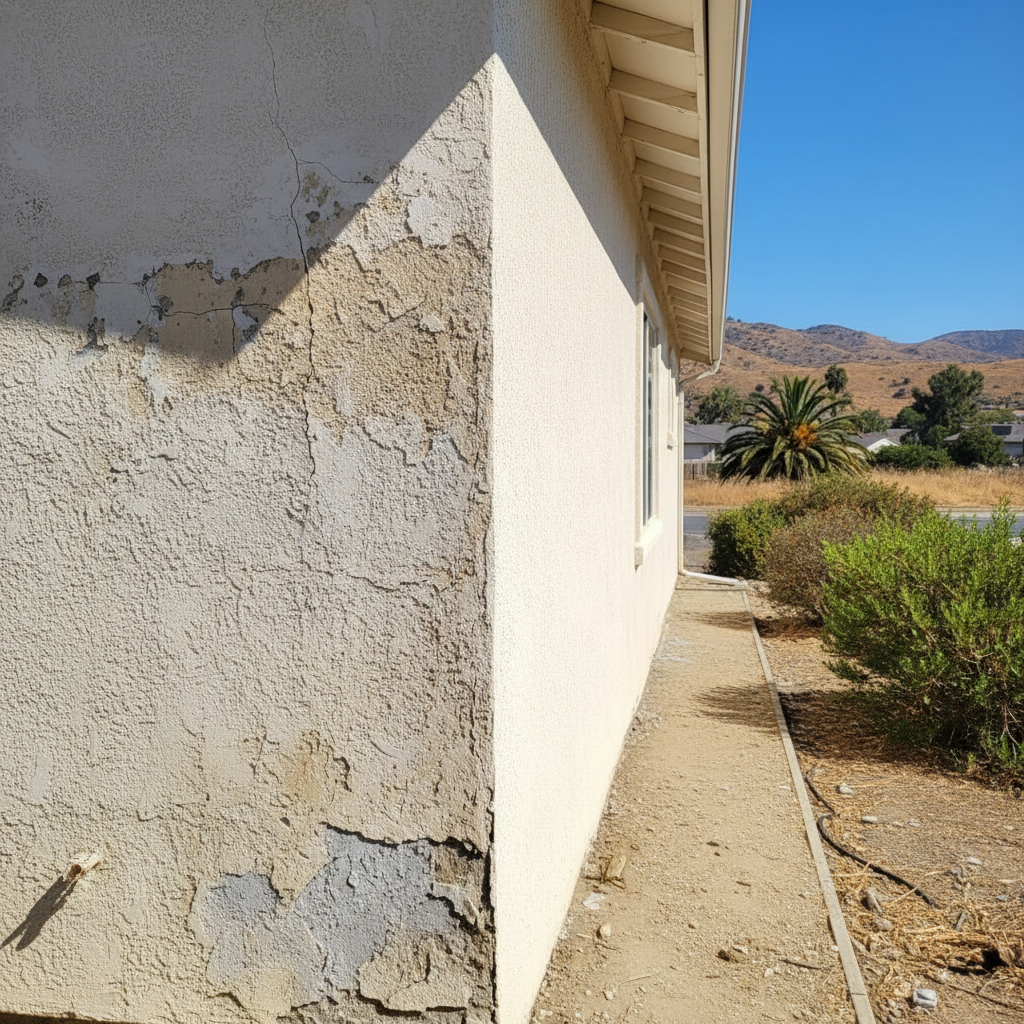
Alright, let's talk stucco. Maybe you're thinking about putting new stucco on your house, or perhaps you're just trying to figure out what's already there. You've probably heard terms like 'traditional stucco' and 'EIFS' tossed around, right? What's the real difference? And more importantly, which one makes sense for your home here in Hemet? I'm going to break it down for you, no nonsense.
What's Traditional Stucco?
When I say 'traditional stucco,' I'm talking about the stuff that's been around forever. It's a cement-based product, usually a mix of Portland cement, sand, lime, and water. We put it on in several coats over a wire lath, and it dries into a really tough, rigid surface. Think of it like a thin, continuous concrete shell for your house.
What's EIFS?
EIFS stands for Exterior Insulation and Finish Systems. This one's a bit newer, and it's a completely different beast. Instead of a cement base, EIFS starts with an insulation board – usually expanded polystyrene foam, which is basically thick Styrofoam – that we attach right to your wall. Then, we apply a base coat with a fiberglass mesh embedded in it for strength, and finally, a finish coat that gives it color and texture. It's lighter and more flexible than traditional stucco, by far.
Cost: What's the Damage?
This is usually the first question people ask, and honestly, it's complicated because there are so many variables. Generally, traditional stucco tends to be a little less expensive upfront for the materials themselves. The labor can be pretty similar, but traditional stucco is a multi-step, multi-day process with drying times between coats. EIFS materials, on the other hand, can sometimes be pricier, especially for that specialized insulation and the finish coats. However, EIFS can sometimes go on faster, which might balance out the labor costs. For a typical Hemet home, you're looking at a significant investment either way, but traditional stucco usually comes in a bit lower on the cost spectrum.
Durability & Maintenance: How Long Will It Last?
Both systems are built to last, but they hold up differently. Traditional stucco is incredibly hard. It resists impact well and can really take a beating. The downside? Because it's so rigid, if your house shifts or settles – which can definitely happen with our expansive clay soils around parts of Hemet, especially in older neighborhoods – you might see hairline cracks. These are usually just cosmetic, but they can let water in if you don't seal them. Maintenance for traditional stucco usually means keeping it clean and fixing any cracks or chips quickly.
EIFS, though, is more flexible. That foam board and synthetic finish mean it can handle minor building movements without cracking as easily. It's also fantastic for insulation, which can be a huge bonus for keeping your AC bill down during our scorching Hemet summers. The main durability concern with EIFS used to be water getting in if it wasn't installed perfectly, but modern EIFS systems have much better drainage and moisture management. It's not quite as impact-resistant as traditional stucco; a hard knock can dent the foam underneath. Maintenance involves regular cleaning and checking for any punctures or damage to the finish coat.
Appearance: What Look Do You Want?
You can get a lot of different looks with both, but there are some subtle differences. Traditional stucco gives you that classic, earthy, Mediterranean vibe. You can choose from various textures, everything from smooth to a sand finish or even heavy lace. The colors are usually mixed into the final coat. EIFS also offers a huge range of colors and textures, and because it's more flexible, it can sometimes achieve finer, more intricate details or smoother finishes without showing as many imperfections. Both can look amazing, it really just comes down to the specific aesthetic you're after.
My Recommendation for Hemet Homes
Look, I've been doing this for a long time at Hemet Stucco & Plastering, and I've seen both systems perform under our local conditions. For most homeowners in Hemet, especially considering our climate and common building practices, I usually lean towards traditional stucco.
Here's why:
- Proven Track Record: It's been used here for generations. We know how it performs, we know how to fix it, and it holds up well to our intense sun and occasional heavy rains.
- Cost-Effectiveness: While EIFS definitely has its benefits, the initial cost of traditional stucco is often more budget-friendly for a solid, long-lasting exterior.
- Repairability: If traditional stucco gets damaged, it's generally easier and less specialized to repair seamlessly. EIFS repairs can sometimes be trickier to blend perfectly if you don't know what you're doing, you know?
- Breathability: Traditional stucco breathes better. In a hot, dry climate like ours, while insulation is good, having a wall that can handle moisture vapor naturally is a definite plus.
That's not to say EIFS is bad. For certain applications, especially where maximum insulation is the absolute top priority, it can be a great choice. But for the average residential homeowner in Hemet looking for a durable, attractive, and cost-effective exterior that will stand the test of time, traditional stucco is often the smarter bet. It's a system that's proven itself in our desert environment, and you really can't go wrong with it.